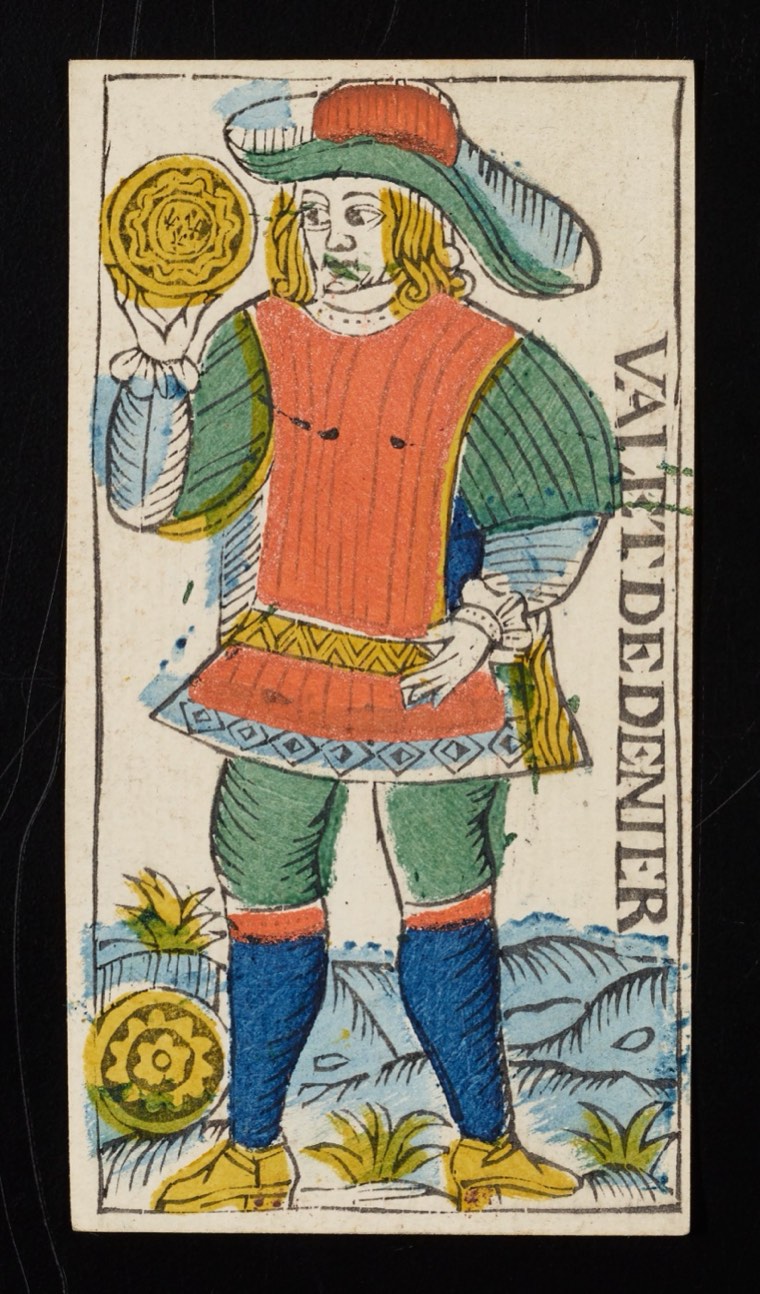
Court · Coins
The Page meets the suit.
The court is a relational stance toward resources, body, craft, stability, value, and material consequence; it need not describe a literal person.
Which visual cue makes Page of Pentacles recognizable before reading its title?
01 · Body and direction
Read the figure before assigning a role.
Read attention, readiness, the held emblem, and whether the body receives, studies, or presents the suit.
Where is attention directed, and what relationship to the suit does the posture suggest?
02 · Suit relationship
Notice how the figure handles Coins.
Read centers, petals, fleur-de-lis forms, spacing, and the distribution of weight across the card.
Is the suit being received, carried, protected, displayed, controlled, or offered?
03 · Reading range
A court can be a person, stance, or demand.
The constructive range includes study, practical opportunity, and diligence; the difficult range includes procrastination, poor focus, and missed lesson. Decide from evidence whether the card names an actor, a way of acting, or a quality the situation requires.
How could study become distorted into procrastination in this situation?
04 · Practice
Study a tangible possibility with patient attention.
Study a tangible possibility with patient attention. Its constructive range includes study, practical opportunity, and diligence; its difficult range can include procrastination, poor focus, and missed lesson.
Where is this function active in the situation: Study a tangible possibility with patient attention.