I · First encounter
Receive an overflowing emotional beginning.
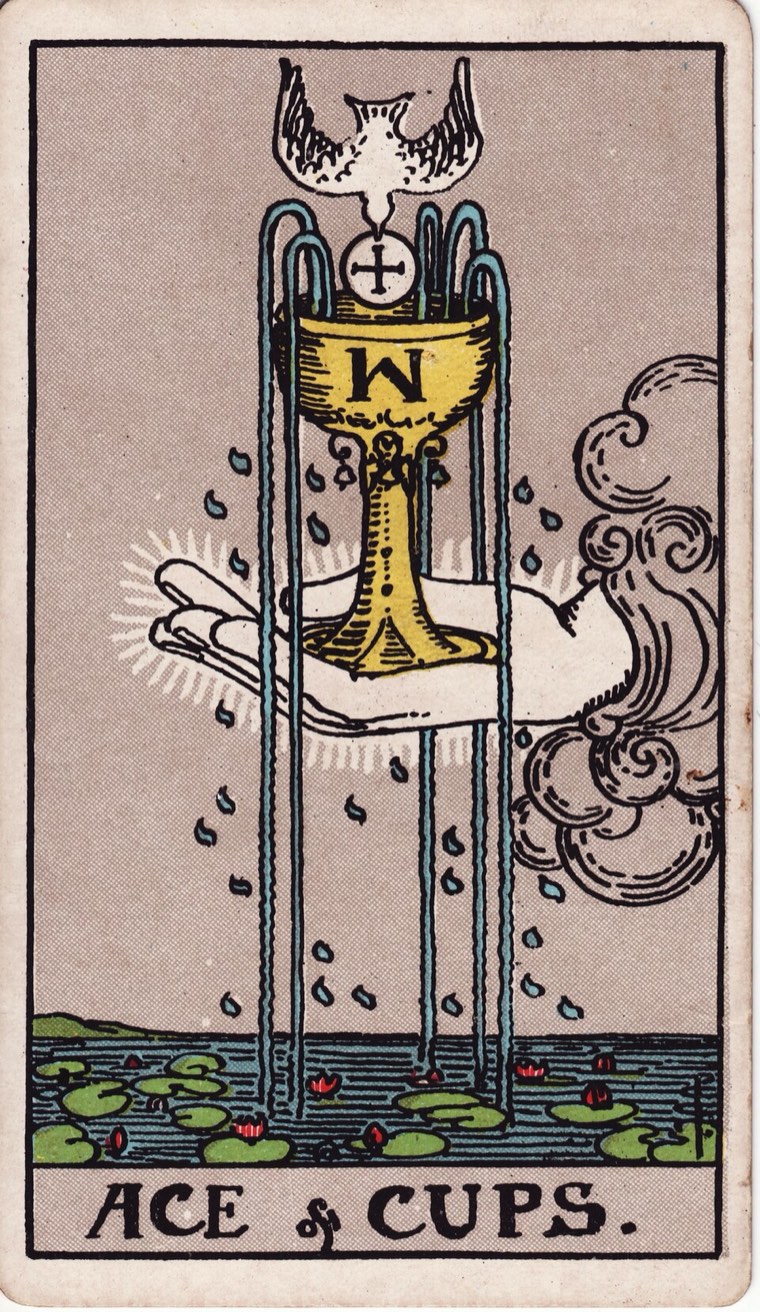
Begin with Pamela Colman Smith’s complete composition. Before reaching for a keyword, notice where your eye lands and what the scene appears to be doing. Receive an overflowing emotional beginning. Its constructive range includes emotional opening, love, receptivity, and grace; its difficult range can include blocked feeling, emptiness, and self-love needed.
Which visual cue makes Ace of Cups recognizable before reading its title?
01 · Recognition
See what makes the card unmistakable.
The canonical visual anchors are one offered cup, overflowing water, receptive basin or landscape, and descending blessing cue. Read them as a relationship inside one scene rather than as isolated symbols to memorize.
Look for: one offered cup · overflowing water · receptive basin or landscape · descending blessing cue
02 · Reading range
Hold possibility and difficulty together.
In a constructive expression, this card may speak through emotional opening, love, receptivity, and grace. Under pressure, the same energy may appear as blocked feeling, emptiness, and self-love needed. Context decides which part of the range matters.
How could emotional opening become distorted into blocked feeling in this situation?
03 · Practice
Bring the image into the question.
Read the suit domain and number together, then adapt that pattern to the question and position. An opening or concentrated seed of the suit. Let the visible evidence support the interpretation, then return choice and agency to the person receiving the reading.
Where is this function active in the situation: Receive an overflowing emotional beginning.