Trump · 15
Expose bonds maintained partly through unconscious participation.
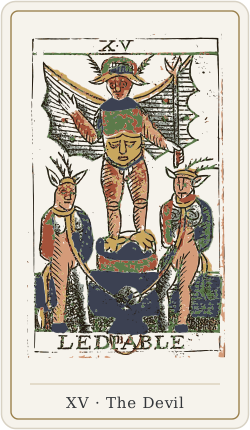
Begin with the complete figure: posture, gaze, gesture, held objects, ground, title, and number. Expose bonds maintained partly through unconscious participation. Its constructive range includes bondage, compulsion, shadow, and material attachment; its difficult range can include release, awareness, and breaking patterns.
Which visual cue makes The Devil recognizable before reading its title?
01 · Direction
See where the figure and action move.
Facing, gesture, and placement create relationships before a keyword does. Notice what the figure approaches, refuses, carries, opens, or leaves behind.
What direction or relationship is visible before interpretation begins?
02 · Sequence
The number places this image in a larger movement.
Read the trump as part of a sequence after Temperance and before The Tower. Sequence offers contrast and development; it does not force one fixed spiritual hierarchy.
What changes when this card is read between its neighbors in the trump sequence?
03 · Reading range
Hold function and difficulty together.
Constructively, this image may speak through bondage, compulsion, shadow, and material attachment. Under pressure, it may show release, awareness, and breaking patterns. Context determines the expression.
How could bondage become distorted into release in this situation?
04 · Practice
Bring the visible action into the question.
Use the printed evidence to form a bounded interpretation, then test it against the spread position and the person’s actual circumstances.
Where is this function active in the situation: Expose bonds maintained partly through unconscious participation.